
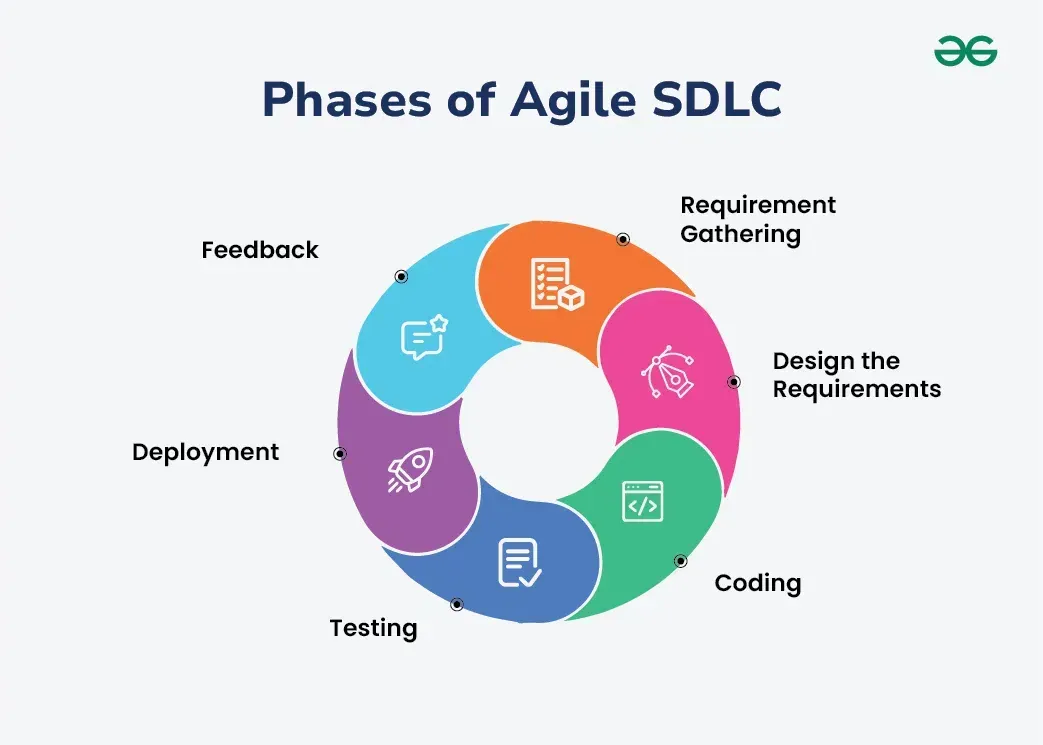
Agile Software Development: The Complete 2026 Guide to Methodology, Manifesto & Scrum
In 2001, seventeen software practitioners gathered at a ski resort in Utah and wrote a document that would permanently change how software is built. That document the Agile Manifesto launched a movement that has since become the dominant approach to software development worldwide.
Today, over 70% of organizations use Agile methodologies for software development. Yet despite its ubiquity, Agile is widely misunderstood reduced to buzzwords like 'sprints' and 'standups' while its deeper philosophy is missed entirely.
This guide gives you a thorough, honest, practitioner-level understanding of Agile: what it is, what it isn't, how it compares to Waterfall, and how to evaluate whether an agency claiming to 'do Agile' actually does.
What Is Agile Software Development?
Agile software development is an iterative approach to building software that prioritizes delivering working functionality in short cycles, adapting to change, and maintaining continuous collaboration between development teams and business stakeholders.
Rather than attempting to plan and build an entire system before any user feedback is received (the Waterfall approach), Agile breaks development into small, time-boxed iterations usually 2-4 weeks called sprints. Each sprint produces a working, tested, demonstrable increment of the product.
The core insight driving Agile is simple but profound: software requirements change. Business priorities shift. Users behave differently than expected. Technologies evolve. Any methodology that assumes requirements can be perfectly known upfront is working against reality. Agile embraces change rather than resisting it.
The Agile Manifesto: The 4 Core Values
The manifesto for Agile software development articulates four fundamental value statements. Each prioritizes something over something else without eliminating either:
- Individuals and interactions over processes and tools People and communication are more valuable than adherence to rigid processes.
- Working software over comprehensive documentation Demonstrable, functioning software is the primary measure of progress.
- Customer collaboration over contract negotiation Continuous client involvement produces better outcomes than locked-down specifications.
- Responding to change over following a plan Flexibility and adaptation are competitive advantages, not signs of poor planning.
👨💻 Expert Insight: The manifesto's authors were careful to say 'while there is value in the items on the right, we value the items on the left more.' Agile doesn't abolish documentation or planning it re-prioritizes them.
The 12 Principles Behind the Agile Manifesto
Supporting the four values are twelve guiding principles that define what Agile behavior actually looks like in practice:
1. Highest priority is customer satisfaction through early and continuous delivery of working software.2. Welcome changing requirements, even late in development Agile processes harness change for the customer's competitive advantage.
3. Deliver working software frequently, from weeks to months, with preference for shorter timescales.
4. Business people and developers must work together daily throughout the project.
5. Build projects around motivated individuals; give them the environment and support they need, and trust them to get the job done.
6. The most efficient method of conveying information to and within a development team is face-to-face conversation (or video call equivalent).
7. Working software is the primary measure of progress.
8. Agile processes promote sustainable development. Sponsors, developers, and users should be able to maintain a constant pace indefinitely.
9. Continuous attention to technical excellence and good design enhances agility.
10. Simplicity the art of maximizing the amount of work not done is essential.
11. The best architectures, requirements, and designs emerge from self-organizing teams.
13. At regular intervals, the team reflects on how to become more effective and adjusts accordingly.
Agile vs Waterfall: A Practical Comparison
The Agile vs Waterfall debate is one of the most searched topics in software development. Here's an honest, practical breakdown:
Waterfall is a sequential model where each phase requirements, design, development, testing, deployment must complete before the next begins. It works well when requirements are fixed, the technology is well-understood, and there is little expectation of change. Government contracts, infrastructure software, and safety-critical systems often use Waterfall.
Agile is iterative. Requirements evolve throughout the project. Working software is delivered every 2-4 weeks. The client is actively involved. The team adapts based on feedback and changing priorities. Most commercial software products, web platforms, mobile apps, and SaaS applications are better served by Agile.
- Speed to first value: Agile wins. You see working software in the first sprint. Waterfall delivers nothing visible until late in the project.
- Predictability: Waterfall wins for fixed-scope projects. Agile's flexibility makes exact end-date prediction harder.
- Handling change: Agile wins decisively. Waterfall change-control processes are expensive and slow.
- Documentation: Waterfall produces more upfront documentation. Agile produces documentation progressively as needed.
- Client involvement: Agile requires and rewards more client engagement. Waterfall can work with less frequent client touchpoints.
- Risk: Agile's short iterations expose risks earlier. Waterfall risks are often only discovered at the testing phase months into development.
💡 Pro Tip: For most business software projects in 2026, Agile is the better choice. Waterfall is most appropriate when you're integrating with legacy systems under fixed government specifications or when regulatory compliance requires exhaustive upfront documentation.
Scrum: The Most Popular Agile Framework
Scrum is a specific implementation of Agile, and by far the most widely adopted. Understanding Scrum means understanding how Agile actually operates day-to-day on real development teams.
Scrum Roles
- Product Owner: Represents the business. Owns the product backlog (prioritized feature list). Makes final decisions on what gets built and in what order. Is accountable for the product's business value.
- Scrum Master: Facilitates the Scrum process. Removes impediments blocking the team. Coaches both the team and organization on Agile principles. Is NOT a traditional project manager.
- Development Team: 3-9 cross-functional professionals who do the actual work design, development, testing. Self-organizes to deliver sprint goals.
Scrum Ceremonies
- Sprint Planning: At the start of each sprint, the team selects items from the backlog and commits to delivering them within the sprint.
- Daily Standup: A 15-minute daily synchronization where each team member answers: What did I do yesterday? What will I do today? What's blocking me?
- Sprint Review: At the end of each sprint, the team demonstrates completed work to stakeholders and collects feedback.
- Sprint Retrospective: The team reflects on the process itself what went well, what didn't, what to change in the next sprint.
Scrum Artifacts
- Product Backlog: The complete, prioritized list of everything the product needs. The Product Owner owns this.
- Sprint Backlog: The subset of Product Backlog items selected for the current sprint, plus the plan for delivering them.
- Increment: The working, potentially shippable product at the end of each sprint.
Kanban: Agile's Continuous-Flow Cousin
Kanban is another popular Agile framework, but unlike Scrum's time-boxed sprints, Kanban focuses on continuous flow. Work items move through visual columns (To Do → In Progress → Review → Done) with strict Work In Progress (WIP) limits that prevent team members from overloading themselves.
Kanban is particularly well-suited to maintenance teams, support queues, and situations where work arrives unpredictably. Many mature teams use a hybrid Scrumban approach Scrum ceremonies with Kanban's visual flow management.
Lean Software Development
Lean software development applies principles from Toyota's manufacturing system to software. Its seven principles Eliminate Waste, Amplify Learning, Decide as Late as Possible, Deliver as Fast as Possible, Empower the Team, Build Integrity In, and Optimize the Whole align closely with Agile values and are especially prominent in startup environments and DevOps culture.
Extreme Programming (XP)
XP (Extreme Programming) is an Agile methodology focused intensely on engineering practices: pair programming, test-driven development (TDD), continuous integration, small releases, and collective code ownership. While less common as a standalone methodology today, many XP practices have been absorbed into mainstream Agile/Scrum teams.
How to Tell If an Agency Actually Does Agile
'We use Agile' is a claim made by nearly every software development agency. Here's how to distinguish genuine Agile practitioners from those using the word as marketing:
- Ask for sprint demo access: Legitimate Agile teams invite clients to Sprint Reviews. If an agency resists regular demos, that's a red flag.
- Ask to see a real product backlog: Can they show you how a backlog is structured? Do they use tools like Jira or Linear? Can you access it as a client?
- Ask about their sprint length: Most Agile teams run 2-week sprints. Very long 'sprints' (6+ weeks) aren't really Agile.
- Ask how they handle changing requirements: The Agile answer is a structured change-request process that re-prioritizes the backlog. 'We hate changes' is a Waterfall mindset.
- Ask who the Product Owner is: On your project, who is responsible for the backlog? If the answer is vague, the Agile process may be vague too.
- Ask for client references: Talk to their previous clients. Ask specifically about communication frequency, sprint demos, and whether the delivered product matched the evolving requirements.
When NOT to Use Agile
Agile is not universally superior. It is the wrong choice when:
- Requirements must be fully documented upfront for regulatory, legal, or procurement reasons (government tenders, medical device software, financial compliance systems).
- The client cannot commit to regular involvement — Agile requires active Product Owner participation that some clients cannot provide.
- The team is geographically distributed across many time zones with no culture of asynchronous communication — daily standups become logistical nightmares.
- The scope is extremely well-defined, fixed, and unlikely to change — Waterfall may actually be faster and cheaper in these cases.
🚀
Take Action: Our development process is
Agile at its core — bi-weekly sprints, client demos after every sprint, and a
transparent backlog you can access anytime. Let's discuss how we'd apply this
to your specific project.
Agile Software Development in Pakistan: 2026 Context
Pakistan's software industry has adopted Agile methodology at a rapid pace, driven by growing demand from international clients who expect modern development practices. Pakistani software houses serving US, UK, and UAE clients in particular are now expected to operate with full Agile tooling Jira or ClickUp for backlog management, GitHub for version control, Slack or Teams for communication, and Zoom for sprint demos.
For domestic clients, Agile adoption is accelerating but still maturing. The biggest challenge for local businesses adopting Agile is the Product Owner role many business owners are not accustomed to the level of ongoing involvement that Agile requires. Development companies that can guide clients through this transition educating them on Agile while managing the project provide significant additional value.
🚀
Take Action: Curious whether Agile is
right for your project? Book a free 30-minute consultation. We'll assess your
requirements, team structure, and timeline to recommend the methodology that
will deliver the best outcome for your specific situation.
More to read
Related articles
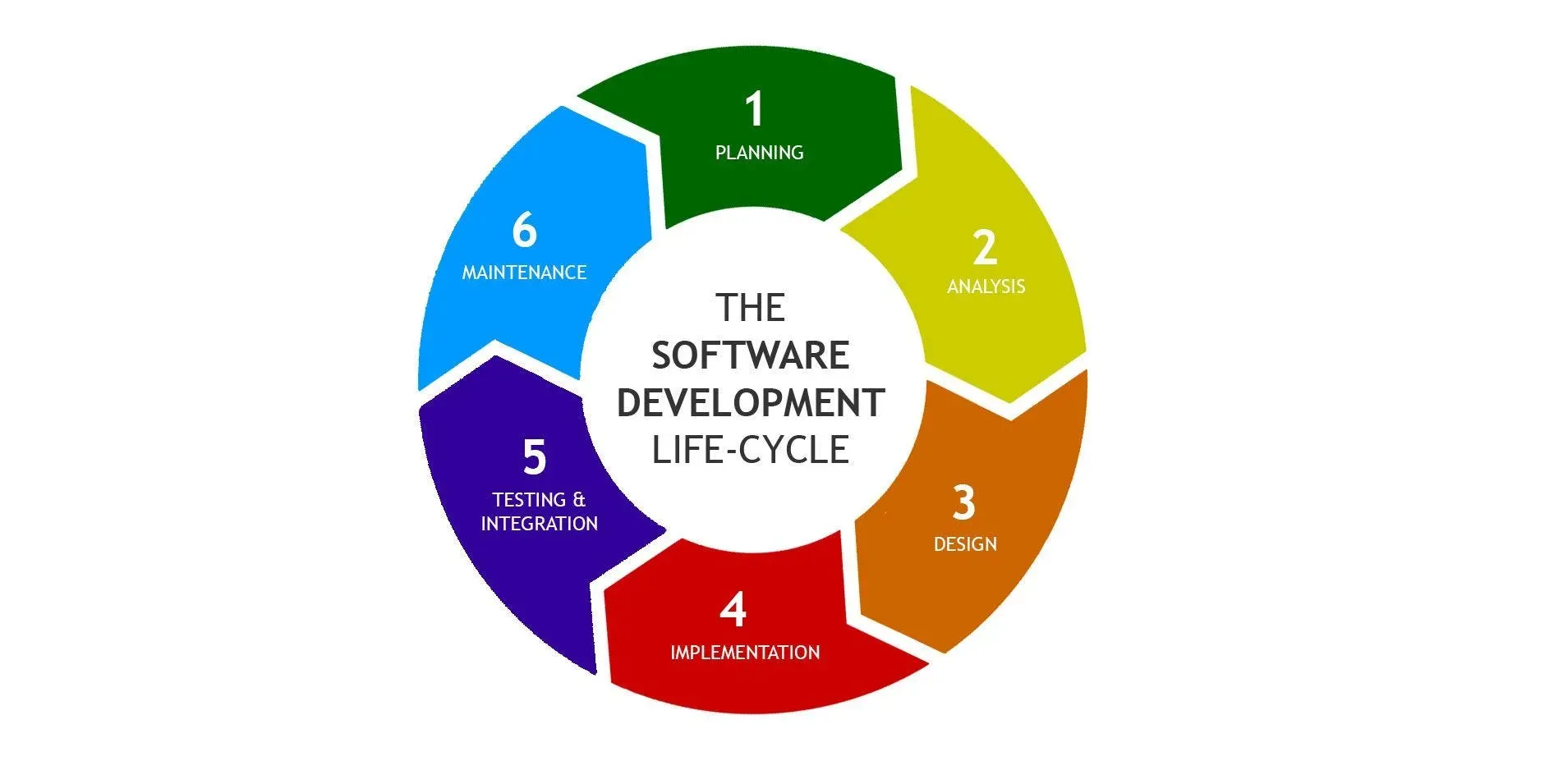
What Is the Software Development Life Cycle (SDLC)? A Complete Guide for 2026
9 min
Read
Custom Software Development: What It Is, What It Costs, and When You Actually Need It
7 min
Read
Software Development Tools, Languages & Frameworks: The Complete 2026 Toolkit Guide
9 min
Read
How to Find and Hire a Software Development Company in 2026 (Without Getting Burned)
8 min
Read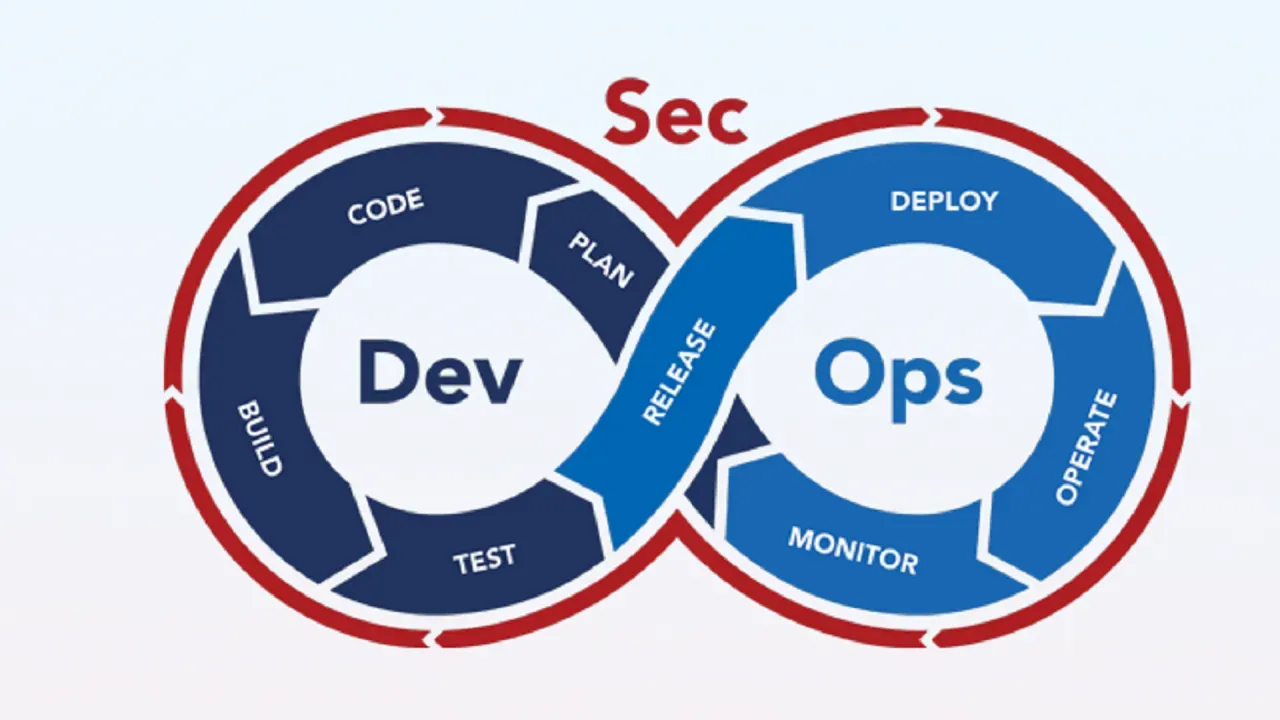
Software Development Quality Assurance, Security & DevOps: The Invisible Work That Determines if Your Software Survives
8 min
Read
How to Start a Career in Software Development in Pakistan in 2026
8 min
Read