All case studies
FOOD & BEVERAGE
How a Fast Casual Restaurant Chain Reduced Order-to-Table Time to Under 8 Minutes Across All Branche
Fast Casual Restaurant Group
A fast casual chain was struggling to deliver on the promise of its model — fast, quality food without the wait. Slow POS workflows, no kitchen display system, and inconsistent service across branches were letting customers down. We rebuilt the operation from the counter back.
React.jsNode.jsMongoDBExpress.jsSocket.IOTailwind CSS
View live product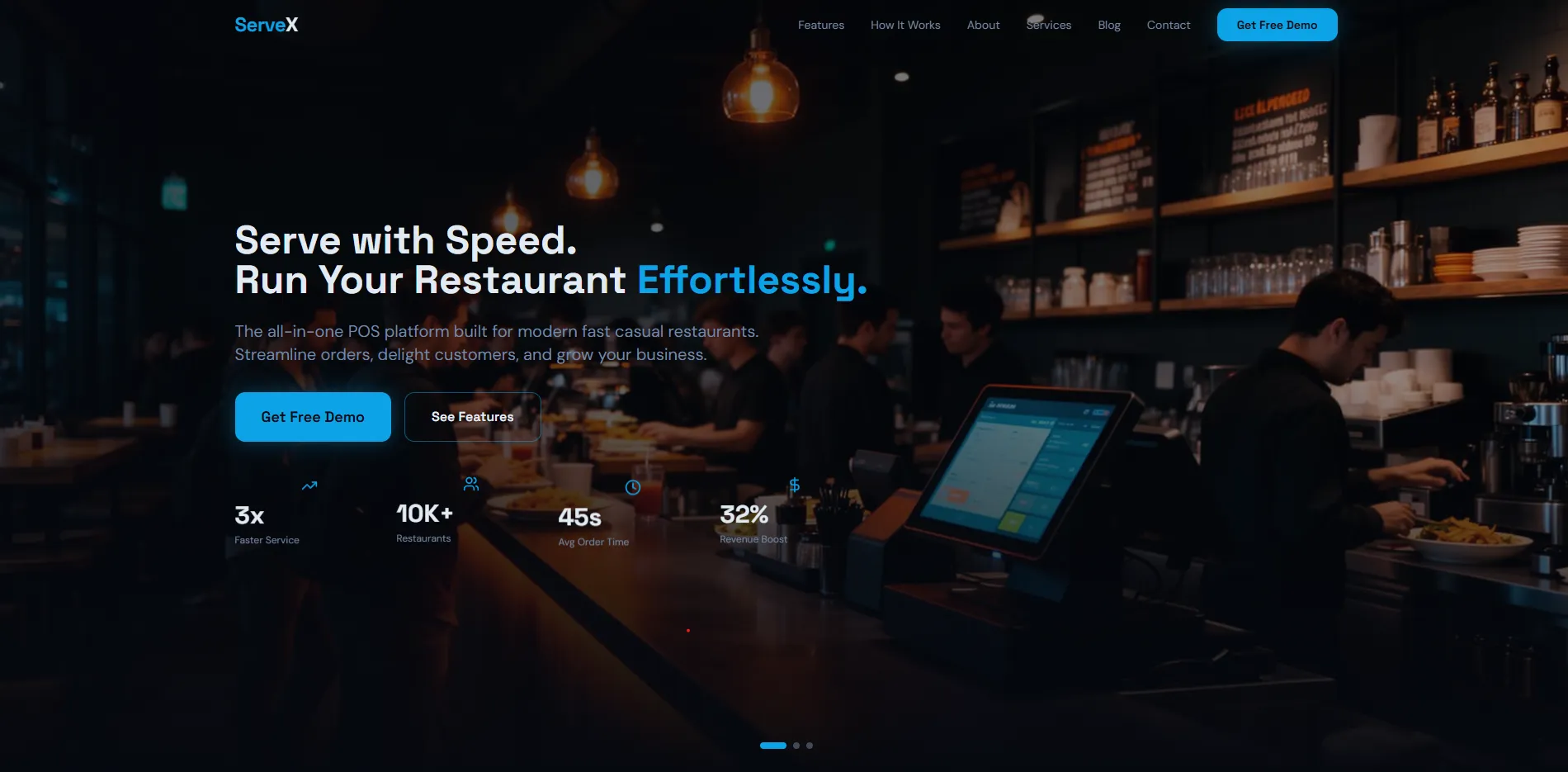
01 Challenge
Challenge
Fast casual restaurants exist in a precise value proposition better food than QSR, faster service than full service. When the "fast" part breaks down, the entire model loses its appeal.
Our client's fast casual chain was consistently missing the speed mark during lunch and dinner peaks. Counter staff were navigating a slow POS to build customizable orders, kitchen staff were working from printed tickets that arrived inconsistently, and there was no digital display keeping customers informed about their order status. Walk-offs during busy periods were becoming a pattern.
Across multiple branches, there was also no consistency each location had developed its own workarounds, and the owner had no reliable way to compare or standardize performance.
02 Approach & delivery
Approach & delivery
We built a Fast Casual POS and Kitchen Management System using React.js and Node.js, specifically designed for high speed counter service environments where efficiency, accuracy, and throughput are critical. The platform is purpose built to reduce friction at the counter while ensuring smooth coordination between front of house and kitchen operations. It replaces fragmented tools and manual coordination with a single unified operational system.
At the core of the system is a fast counter POS interface designed for rapid order entry. It supports customizable build your own meal flows, intelligent combo management, and contextual upsell prompts that increase average order value without slowing down the transaction process. The interface is carefully optimized to keep customer wait times minimal while still giving staff full flexibility during order customization.
The Kitchen Display System (KDS) ensures real time order flow into the kitchen the moment a transaction is completed. Orders are automatically routed to the correct preparation stations and visually organized using color coding based on elapsed time and priority. This allows kitchen staff to instantly understand workload distribution and urgency. Audio alerts notify staff when orders are ready, helping maintain consistent service speed during peak hours and reducing missed or delayed orders.
To improve front counter efficiency, we implemented a customer order status display system. This screen shows live order updates including received, preparing, and ready statuses. It significantly reduces counter inquiries, improves transparency, and helps maintain smooth customer flow during busy periods by keeping waiting customers informed at all times.
The platform also supports self service kiosk integration, allowing customers to place orders independently during peak hours. This reduces counter congestion, shortens queues, and redistributes order load more efficiently across the system without disrupting kitchen operations or service consistency.
For multi location operations, we built a centralized standardization module that ensures menus, pricing, and promotional campaigns are managed from a single system and deployed consistently across all branches. This eliminates operational discrepancies between locations, reduces manual update effort, and improves brand consistency at scale.
Finally, the system includes speed of service analytics that track order to ready times at both item and branch level. This data provides deep operational visibility, helping management identify bottlenecks early and continuously refine kitchen workflows, staffing efficiency, and menu performance.
Overall, the system turns fast casual operations into a tightly synchronized, data driven environment where every order moves through a controlled and measurable pipeline. It replaces guesswork and manual coordination with real time intelligence, allowing staff to focus on execution while the system manages flow, visibility, and operational precision across the entire customer journey.
Ready to discuss your initiative?
We scope, build, and ship tell us what you're working on and we'll share relevant references.